
Virginia Police Blotter
Virginia police blotter records are public law enforcement logs maintained by sheriffs, police departments, and state agencies across all 95 counties and 39 independent cities in the Commonwealth. These records document incidents, arrests, and calls for service filed with local and state agencies. You can search Virginia police blotter data through agency websites, the Virginia Courts online case system, and formal Virginia Freedom of Information Act requests. This guide covers where these records live and how to get them.
Virginia Police Blotter At a Glance
What's in a Virginia Police Blotter
A police blotter is a log of law enforcement activity. It records each incident by date, time, type, and location. In Virginia, blotters are kept by county sheriffs, city police departments, and the Virginia State Police. The content and format vary from one agency to the next, but most entries share the same core fields.
Most Virginia police blotter entries include an incident number, offense type, a block-level address, the time of response, and the initial outcome of the call. Some agencies list arrest information in the blotter itself. Others keep arrest logs as a separate record. Large departments like Fairfax County Police and the Henrico County Police Division publish daily summaries but these only cover notable incidents, not every call for service. Smaller sheriff offices sometimes post weekly blotter reports in local newspapers or on their websites. The level of detail and frequency of posting depends entirely on the agency.
Arrest records and blotter entries are related but distinct. An arrest record shows who was taken into custody, what charges were filed, and when the arrest happened. Both types fall under Virginia public records law, which means anyone can request them through a formal FOIA process.
Virginia agencies use the Incident-Based Reporting (IBR) system to classify and record crime data. IBR captures offenses, victims, property loss, and arrestee information in a standardized format. This feeds the statewide crime database managed by the Virginia State Police. Understanding IBR helps explain why blotter descriptions sometimes use specific offense codes rather than plain language descriptions.
The Virginia State Police website provides access to statewide criminal history data, crime statistics, and the Sex Offender Registry. It is the central resource for Virginia-wide law enforcement information.
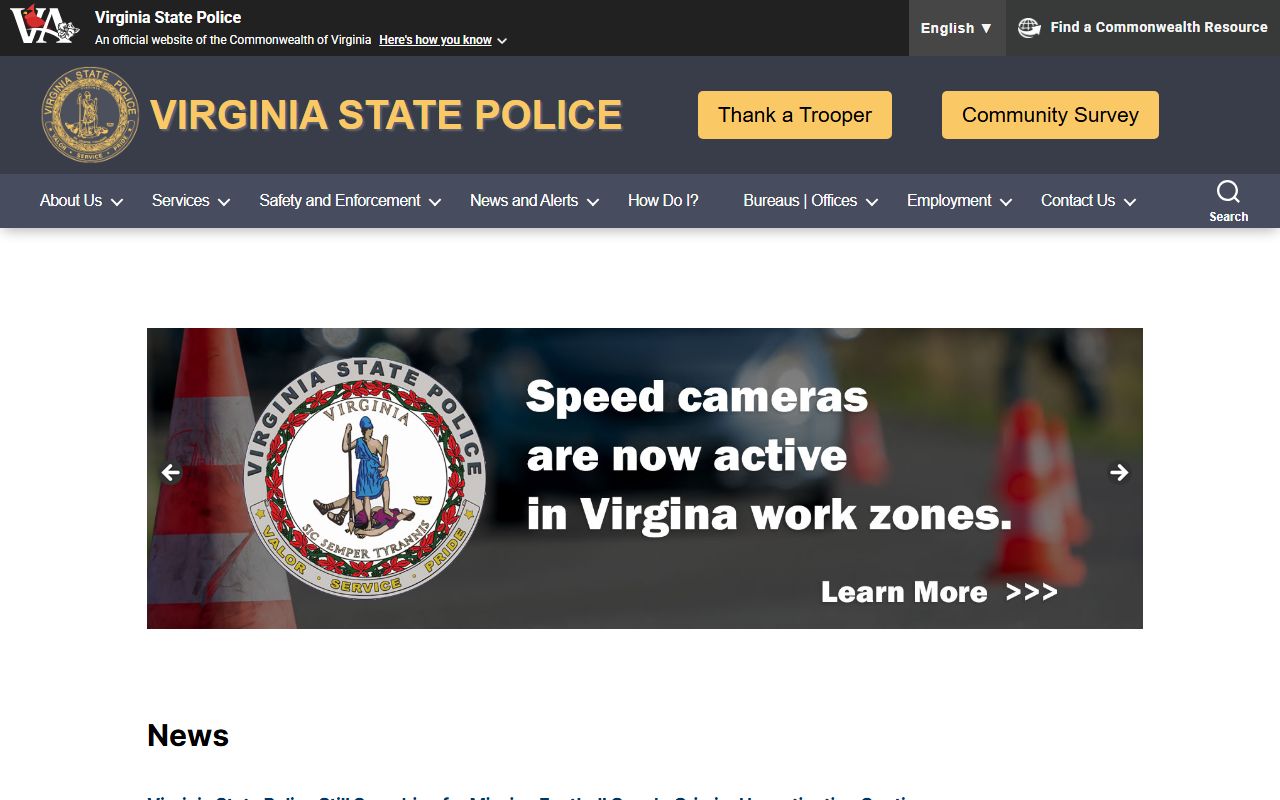
The Virginia State Police maintains the central repository for criminal history records across the Commonwealth and publishes the annual Crime in Virginia statistical report.
Virginia FOIA and Police Blotter Access
The Virginia Freedom of Information Act covers police blotter and incident report access. Found in Virginia Code sections 2.2-3700 through 2.2-3714, the law gives citizens the right to request public records from any government agency. Police blotter data, incident reports, and arrest records are public records. Any Virginia citizen can file a request. You do not need to give a reason.
Agencies must respond within five business days. Day one is the first working day after your request arrives. The agency can provide the records, deny the request with a written explanation citing the exact code section, or ask for more time if the scope is very large. A practical impossibility extension gives agencies up to seven additional working days. Common exemptions that apply to police records include active criminal investigation records under Virginia Code section 52-8.3 and criminal history information under section 19.2-389. Personnel records and attorney-client materials are also routinely withheld.
You can submit a FOIA request by email, phone, mail, fax, or in person. Written requests are best because they create a clear record. Agencies can only ask for your name and legal address. They cannot ask why you want the records, and they cannot require you to justify your interest.
The Town of Front Royal provides a useful example of how these requests are processed locally. Their FOIA process allows requests by email at foia@frontroyalva.com, by mail to 102 E Main St., Front Royal, VA 22630, in person, or through an online form. All requests are processed under Virginia Code 2.2-3700 et seq.
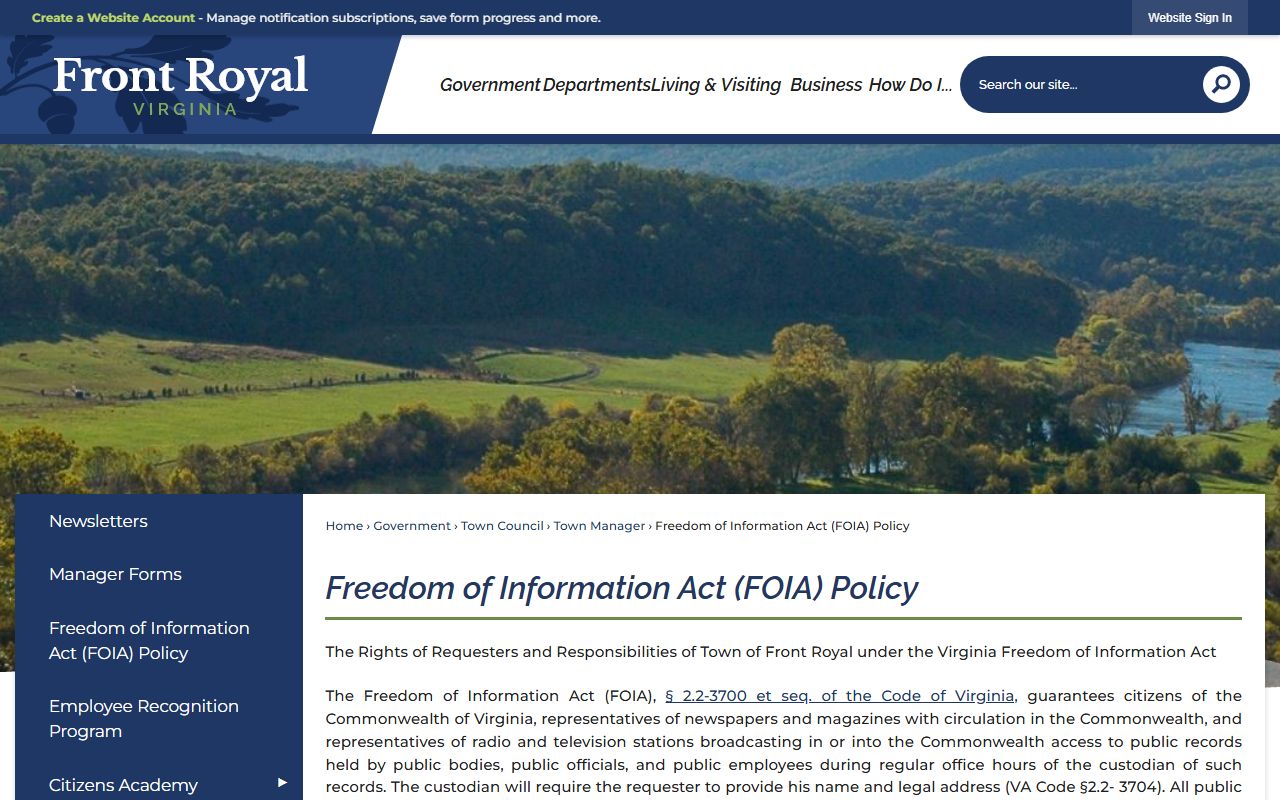
Front Royal's FOIA policy makes clear that any writing or recording owned by a public body is a public record, and all such records are presumed open unless a specific statutory exemption applies.
How to Request Police Blotter Records
Start by finding the right agency. County residents contact the county sheriff's office. City residents go to the city police department. For crashes on state highways, the Virginia State Police or the Virginia DMV may hold the report. Accident reports are available under Virginia Code section 46.2-379 to drivers, passengers, injured parties, and their legal representatives. The Virginia DMV charges $8 per copy and requires an Information Request Form (CRD 93).
Once you identify the agency, contact them directly. Give specific details. Include the incident date, location, names of parties involved if known, and any case number you have. Vague requests take longer to process and are harder for agency staff to fill. Agencies are required to identify records with reasonable specificity before they can locate and release them. Asking for all police records from a certain year, for example, is too broad under Virginia FOIA standards.
Prince William County Police posts a current adult arrest report online, listing those arrested over the most recent four-week period. Their FOIA page explains the full request process. Requests go to their FOIA Liaison Officer at 1 County Complex Court, Woodbridge, VA 22192, by phone at 703-792-6500, or by email. The Communications and Public Information Section at 703-792-5123 handles inquiries about specific crimes or incidents.
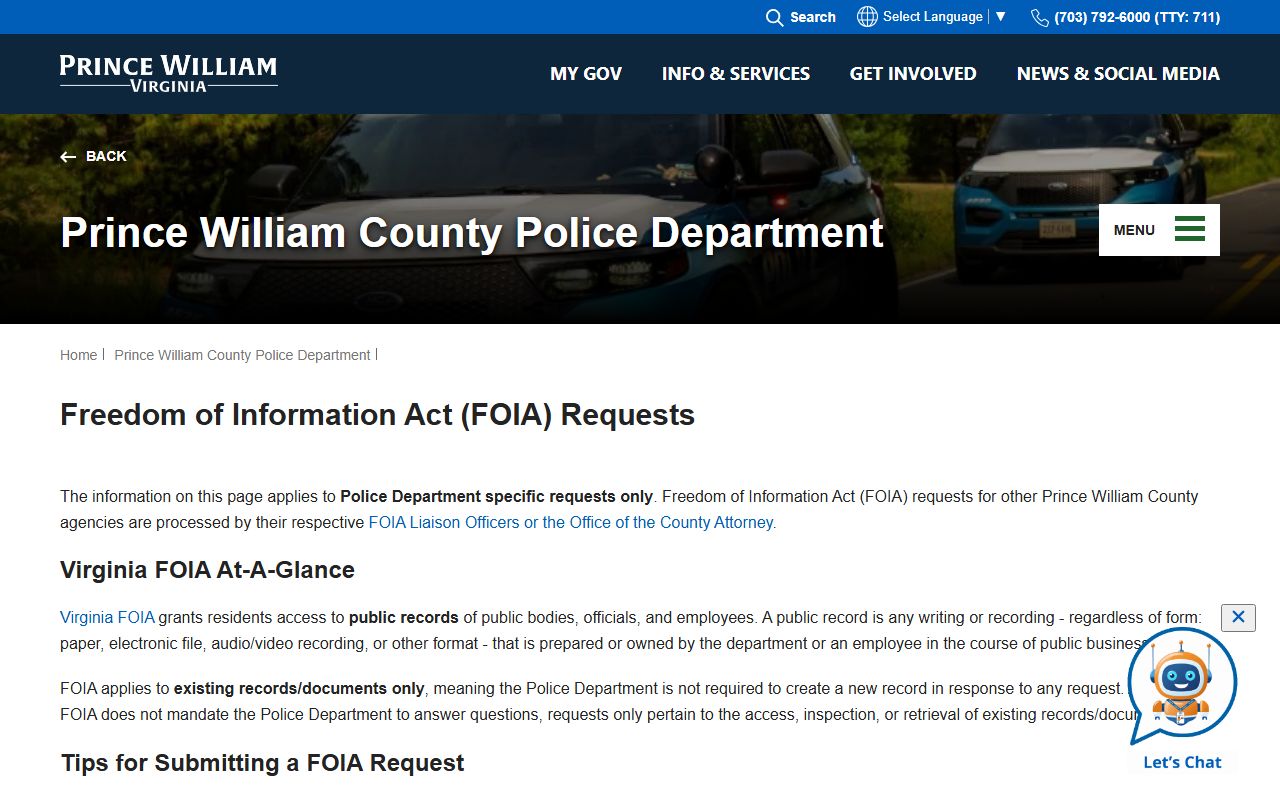
Prince William County also publishes daily incident reports each weekday covering significant incidents and arrests, though these reports do not include every call for service or every arrest made.
The Fredericksburg Police Department notes that any request for records qualifies as a FOIA request, even without citing the specific law. Requests go to FOIA@pd.fredericksburgva.gov, in person at 2200 Cowan Blvd., Fredericksburg, VA 22401, or by phone at 540-373-3122. Draft documents, electronic files, audio recordings, and photos all count as public records if they were made in the course of public business.
Virginia State Police and Criminal Records
The Virginia State Police Criminal Justice Information Services (CJIS) division manages the state repository for criminal history data. To request a criminal history record by name, Virginia uses the SP-167 form. This is a name-based search that does not use fingerprints. The form requires your current legal name, all aliases, date of birth, sex, race, and current mailing address. Notarization is required for mail submissions. Results show only Virginia charges and dispositions. They do not include records from other states or federal courts.
The VSP publishes "Crime in Virginia" each year. The 2024 report shows the Commonwealth recorded 16,853 violent offenses, a 7.0% drop from 2023. Murder rates declined to 4.78 per 100,000 people. Motor vehicle theft fell 15.4%, and burglary dropped 10.6%. Drug arrests declined 7.2% overall, with heroin seizures down 26.5%. These state-level figures give context to what appears in local police blotter reports across the Commonwealth.
The Virginia Sex Offender and Crimes Against Minors Registry is also maintained by VSP. It uses a three-tier offense-based system. Tier III offenders, those convicted of the most serious offenses, must verify their address quarterly for life. This registry is publicly accessible online and separate from the police blotter system.
Online Police Blotter Data Across Virginia
Several Virginia agencies publish police blotter data online without requiring a formal request. Access varies widely. Some departments post daily logs. Others only publish summaries of major incidents.
Norfolk leads the state in open data access. The Norfolk Open Data portal offers five years of police incident reports, updated every day. Each record includes the incident ID, offense description, block address, date, hour, police zone, district, sector, and neighborhood. Citizens can filter and download data without submitting any request. This model represents one of the most transparent police data systems in the state.
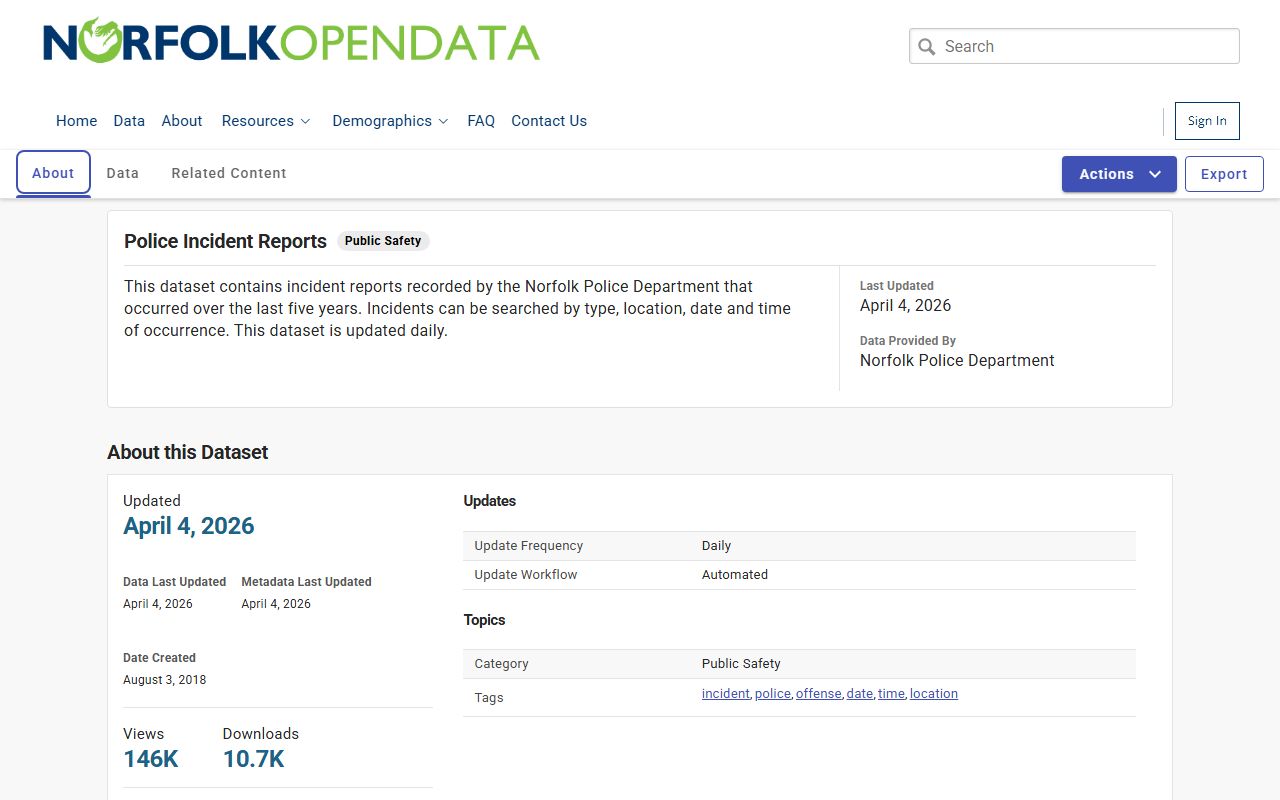
Norfolk's open data portal also includes a Police Arrest Reports dataset updated daily showing the previous 24 hours of arrest activity, giving residents near real-time access to police blotter information.
Henrico County Police offers similarly robust access through their public data page. Residents can search incident crime reports, calls for service, and arrest reports. The department also runs an active calls system at activecalls.henrico.gov showing current police response in real time, including call type, block location, time received, and police district. Henrico reported 9,676 total arrests in 2024, down 3.3% from the prior year. Larceny, simple assault, and driving under the influence were the top three arrest categories.
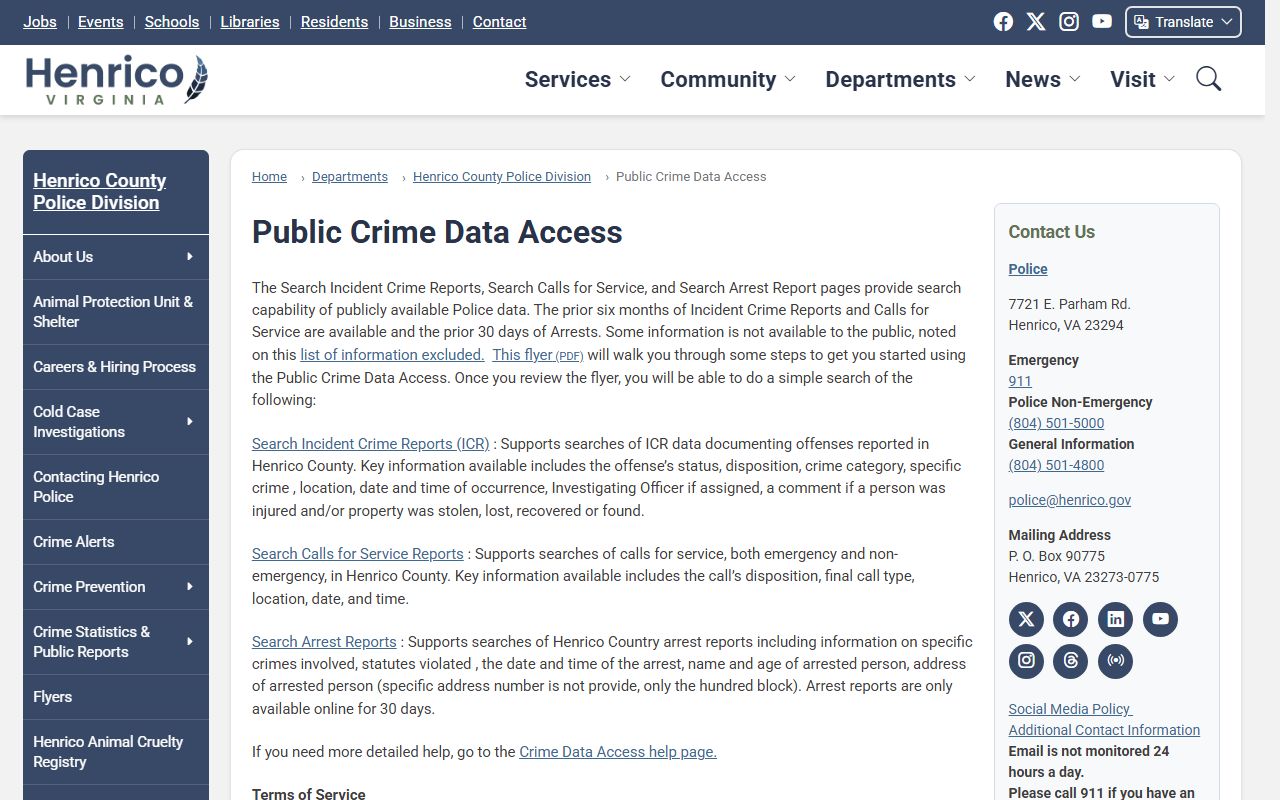
Henrico's Criminal Records Unit at 7721 E. Parham Road, Henrico, VA 23294, handles formal requests by phone at 804-501-4809, by mail, or in person during normal business hours.
Chesterfield County Police posts active warrants in PDF format updated each business day. Their records page includes a live calls and incidents map showing police activity by neighborhood. Active traffic incidents across Chesterfield, Henrico, and Richmond also appear on the same platform. The Chesterfield department serves a population of over 360,000 with more than 500 sworn officers.
Loudoun County Sheriff's Office publishes daily incident reports on weekdays and maintains a Crime Dashboard with mapping tools. Fairfax County Police, Virginia's largest department serving over 1.1 million residents, makes weekly crime data available for download through their download center. A new Records Management System implemented in May 2025 means some data gaps exist during the transition.
Courts and Criminal Case Records
Police blotter entries often lead to court cases. The Virginia Judiciary maintains online case information for both General District Court and Circuit Court. The General District Court system lets you search by party name, case number, or hearing date. Results include charges, case status, and scheduled hearings. Online payment is available for certain case types.
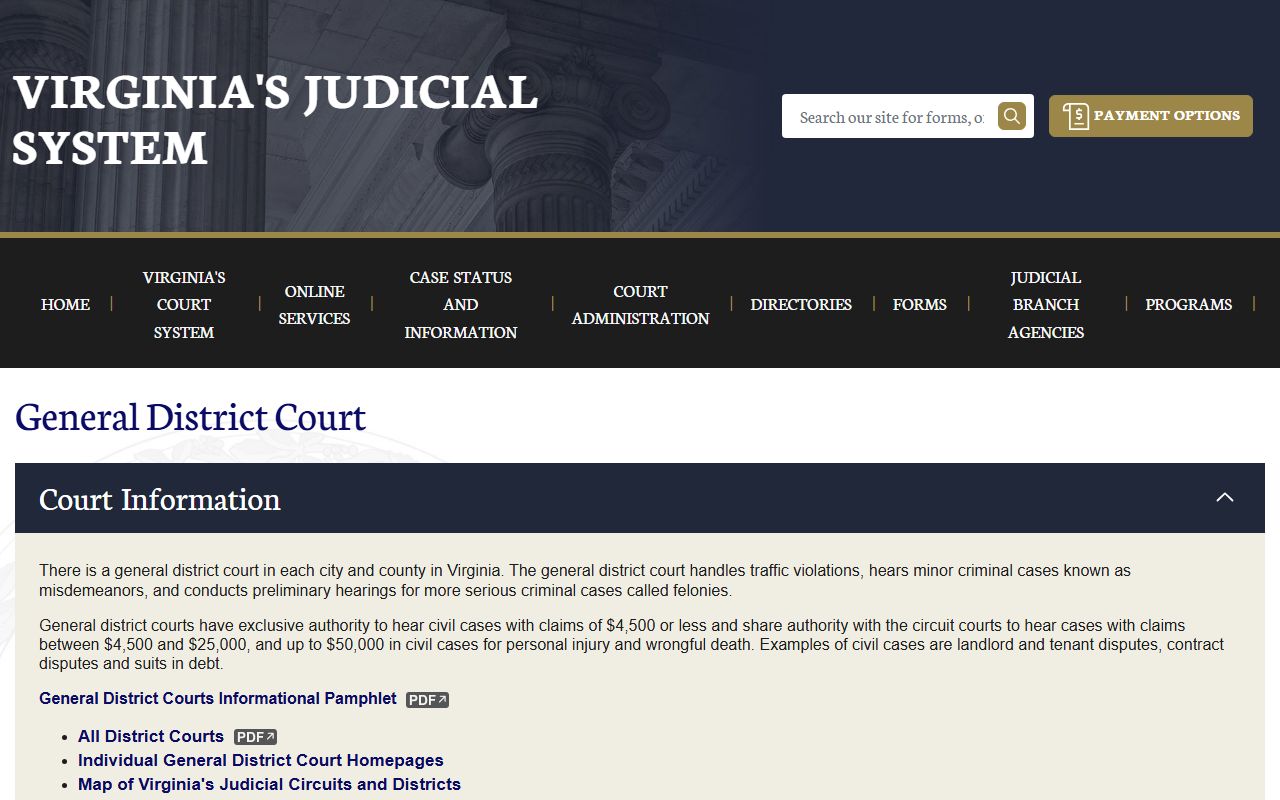
The General District Court handles misdemeanors, traffic offenses, and civil cases under certain dollar thresholds, making it the starting point for many cases that begin as police blotter entries.
The Circuit Court case information system covers felony cases and higher-value civil matters. Criminal case numbers use a "CR" prefix followed by a ten-digit number. Civil cases use "CL." One significant limitation: there is no statewide search for Circuit Court cases. You must search each jurisdiction's court individually. Many smaller courts do not participate in the online system at all.
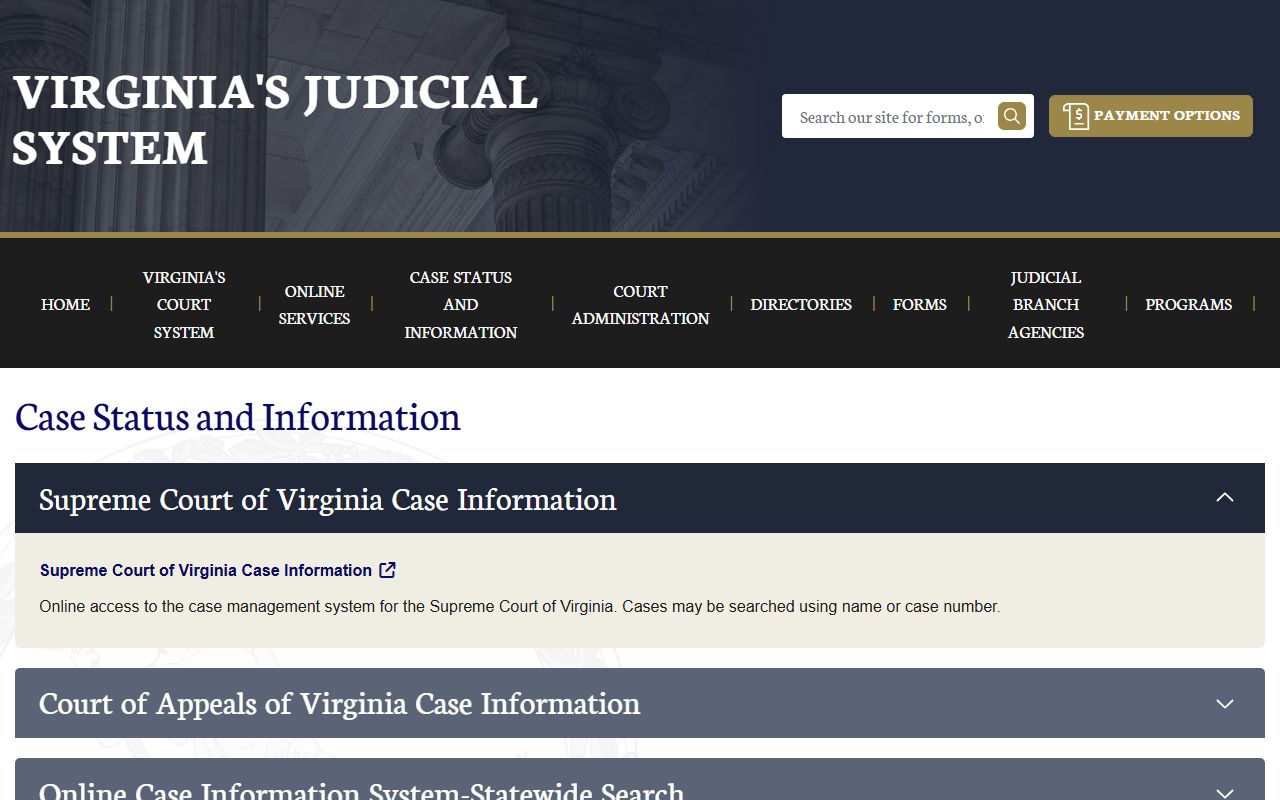
Juvenile and Domestic Relations District Court cases are not searchable online. Those records are kept confidential to protect families and minors, and in-person contact with the specific court is required to access them.
Gloucester County Circuit Court offers an example of expanded remote access. Their court makes deeds and land records from August 1862 to present, financing statements from September 1994 to present, judgments from October 1993 to present, and wills from October 1862 to present available through paid remote access at $150 per user per quarter.
Types of Police Blotter Records
Knowing what type of record you need makes the process faster. Virginia law enforcement agencies maintain several distinct record types. Each has different access rules and retrieval steps.
Incident reports document officer response to a call or complaint. They record what happened, who was involved, and what action was taken. Arrest reports are filed when someone is taken into custody. They list the charges, arresting officer, and basic identifying information. Crash reports document traffic accidents investigated by officers. Under Virginia Code section 46.2-379, accident reports are available to drivers, passengers, injured parties, their attorneys, and insurance representatives. The Virginia DMV retains accident reports for at least three years.
Chesterfield County's fee schedule is representative of what you may encounter across Virginia. Effective July 1, 2021, the department charges for FOIA responses at the lowest hourly rate for a qualified employee. Costs under $20 are waived. Crime victims pay nothing. Requests likely to exceed $200 require a half-deposit before processing begins. Their police records page lists all available report types including accident reports, incident reports, record checks, and fingerprinting services.
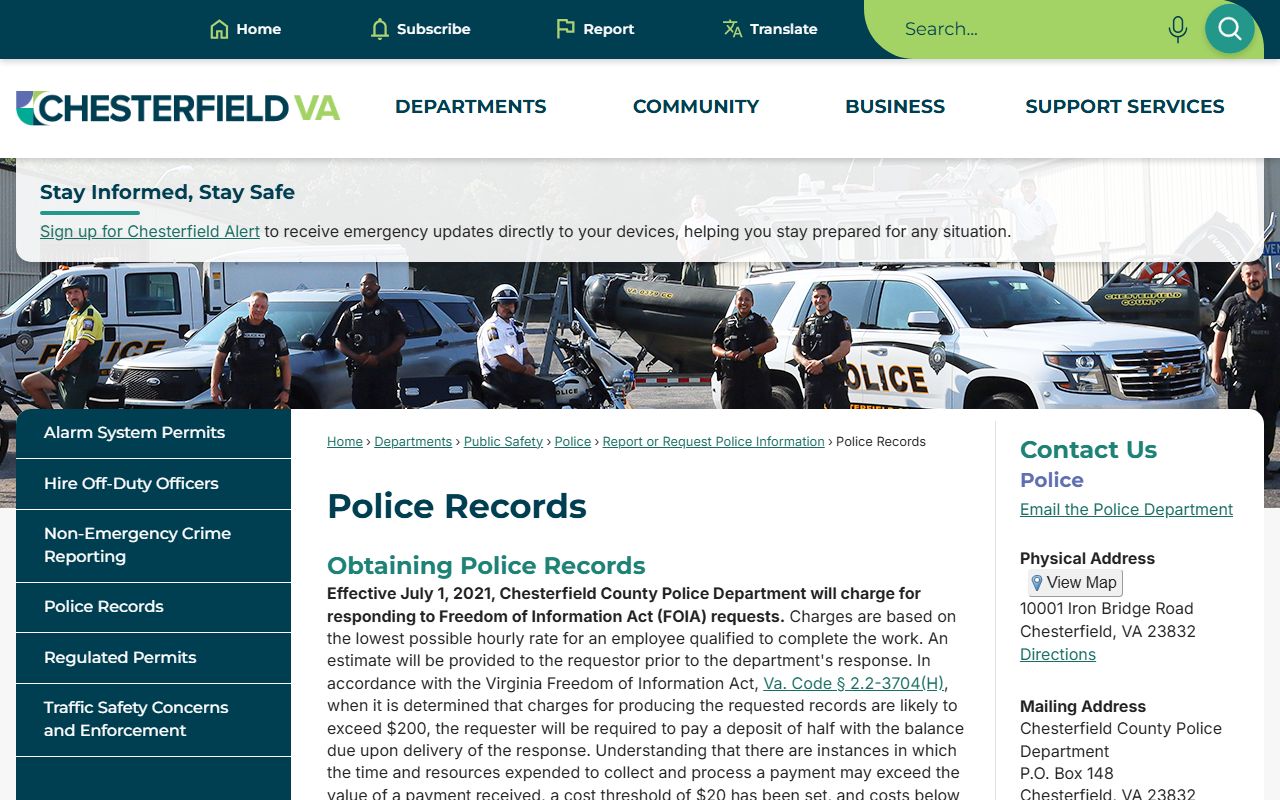
Chesterfield's active calls data and incident map update every few minutes, offering one of the most current views of police blotter activity available anywhere in the state.
How Virginia Agencies Handle Blotter Requests
The Lynchburg Police Department has published one of the most detailed FOIA guides of any Virginia agency. Their Records Unit at 3405 Odd Fellows Road, Lynchburg, VA 24501, processes all public record requests. Phone: 434-455-6052, Option 1. Email: foialpd@lynchburgva.gov. The department outlines five possible responses to any request: full release, full denial with a specific statute cited, partial release with redactions, a 12-day extended timeline, or a court petition for very large requests.
Lynchburg's guide confirms that the department cannot ask why you want police blotter records. They can only ask for your name and legal address before they process your request.
Waynesboro follows a similar approach. Their police department guidance makes clear that requests must identify records with reasonable specificity. This doesn't limit how many documents you can request, but you must be specific enough that officers can locate what you need. A request for all police activity reports ever created would not meet this standard. A request for the incident report from a specific date and location would.
Waynesboro Police can be reached at their non-emergency line at 540-942-6675. Their FOIA guidance also notes that requesters may choose to receive electronic records in the format the department already uses, which can save on copying costs.
The Charlottesville Police Department uses a Citizen Connect platform to provide crime mapping and incident data online. Court resources for Charlottesville General District Court, Circuit Court, and Juvenile and Domestic Relations Court are linked directly from the department's public data page. Charlottesville's incident report procedures follow General Order 522.15, which requires officers to complete a report for any call involving a crime, use of force, serious injury, or missing person.
Browse Virginia Police Blotter by County
Virginia's 95 counties each have a sheriff's office that holds local police blotter records and processes FOIA requests. Select a county below to find the sheriff's contact information, online access options, and local procedures.
Police Blotter Records in Virginia's Major Cities
Virginia's 39 independent cities each maintain their own police departments and blotter records. Select a city to find department contact details and online access options.